🏗️ Heavy Haul / OOG / Oversize

US Heavy Haul & Oversize Freight

Over-height, over-width, over-weight, machinery and OOG container moves. We match Flatbed, Step Deck, Lowboy / RGN equipment and handle permit, route planning, loading conditions and last-mile delivery.

Get Heavy Haul Quote Standard TL Quote

What counts as oversize / OOG?

Anything that won't fit in LTL / dry van or needs specialized equipment / permits

📐

Over-Height

Loaded height > 13'6" needs specialized trailer and possibly permits

↔️

Over-Width

Width > 8'6" needs wide load permit, may require pilot or escort vehicle

📏

Over-Length

Length > 53' needs stretch trailer or multi-axle equipment

⚖️

Over-Weight

Total weight > 80,000 lbs needs overweight permit and reinforced equipment

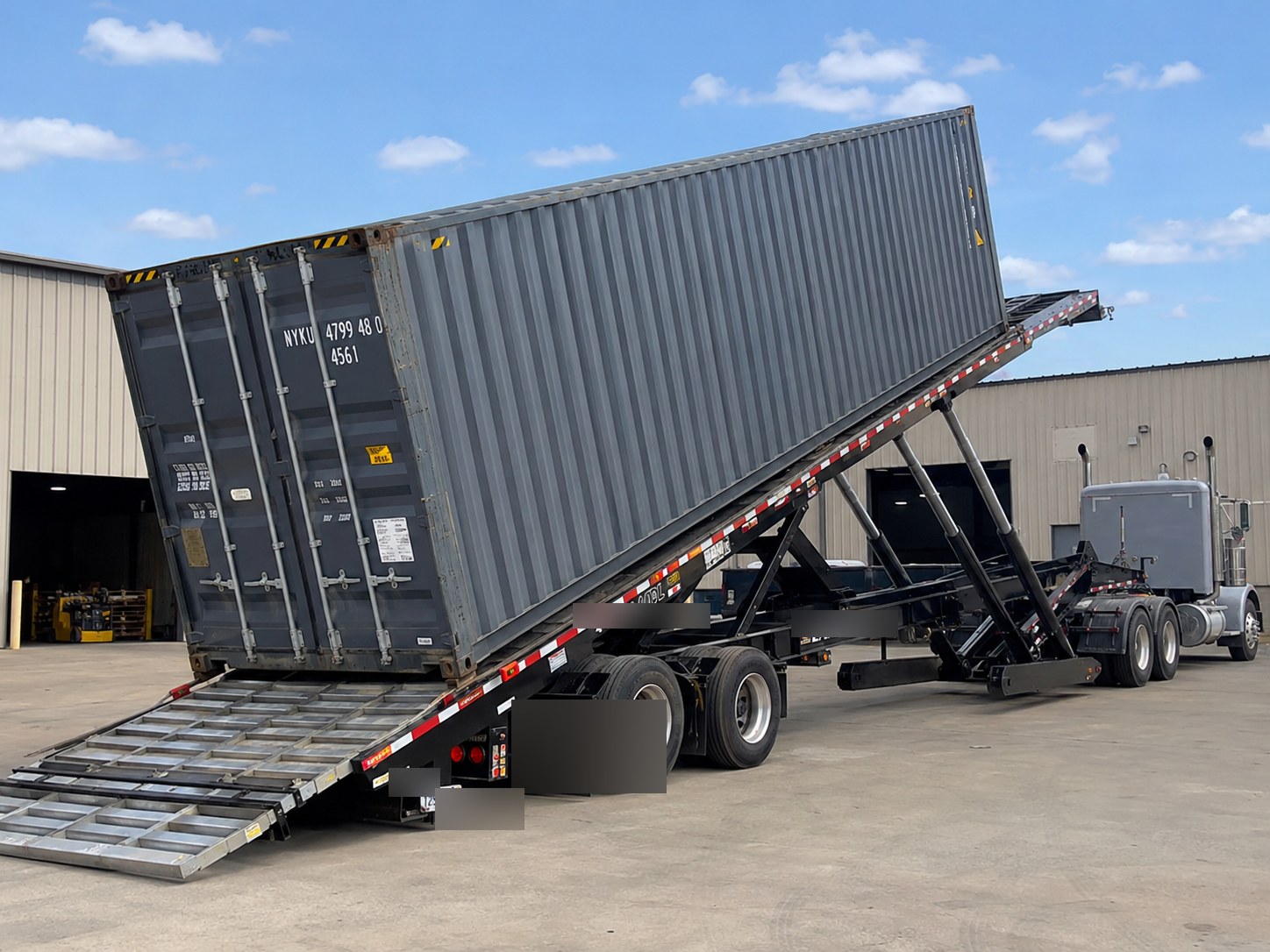
Traveling axle tilt-bed trailer unloading a 40ft container to ground level — OOG / heavy container delivery without crane or forklift
Traveling axle (tilt-bed) trailer: tilts and slides a full container down to ground level when the site has no crane or forklift — ideal for OOG / Open Top / Flat Rack heavy container last-mile delivery

Which equipment? Flatbed / Step Deck / Lowboy

Wrong equipment = can't load on site. Confirm before quoting.

🚛

Flatbed

Standard flatbed
  • Deck height~5'
  • Deck length48' / 53'
  • Capacity~48k lbs
  • Max stacked height~8'6" before over-height
🪜

Step Deck

Drop deck
  • Upper deck~5'
  • Lower deck~3'6"
  • Capacity~48k lbs
  • Best forSlightly tall loads
⬇️

Lowboy / RGN

Removable Gooseneck
  • Deck height~2'
  • Capacity40k - 150k lbs
  • Max stacked height~11'6"
  • Best forHeavy machinery, transformers

8 things to prepare before quoting

More info = more accurate quote. Avoids rebill or rejection on site.

1

L × W × H per piece

Inches or cm, specify units clearly

2

Weight per piece

lbs or kg — determines equipment capacity

3

Total piece count

Affects loading and number of trucks

4

Stackable / tiltable?

Non-stackable / non-tiltable changes equipment choice

5

Forklift loadable?

Otherwise needs crane / rigging service

6

Origin / destination ZIP

Drives route and per-state permit requirements

7

Delivery site conditions

Dock / forklift / appointment / clearance height?

8

Loaded total height

Cargo height + deck height — over 13'6"?

Real Inquiry · Technical Analysis

One Crusher OOG Shipment: Comparing 5 US Ports on Total Cost

The customer's cone crusher equipment moved in 3 flat-rack containers (1×40FR + 2×20FR) to a stone-processing facility in central Ohio. The RFQ left the port choice open — so instead of comparing only road distance from each port to the destination, we weighed pickup, transload, heavy-lift, empty-return and oversize-permit costs across five candidate ports: Los Angeles, Savannah, New York/New Jersey, Baltimore and Norfolk.

3
Flat Rack containers
1+2
40FR + 20FR mix
35.7t
40FR total cargo weight
5
Candidate ports compared

How we analyzed it

  1. The 40FR carries 35.7 metric tons (roughly 78,730 lbs) of cargo. Add container tare weight and chassis, and it likely approaches legal road axle-weight limits — that weight itself is the constraint that should drive the port decision, not an assumption that any port can simply put it on the road.
  2. Rather than comparing the shortest road distance to Ohio, we added port pickup, in-terminal devanning, heavy-lift/rigging, empty-container return, and any oversize-permit needs into one total-cost comparison.
  3. Baltimore and Norfolk both have heavy-lift container capability at the terminal, so they went on the shortlist even though the road distance to Ohio is somewhat longer than from Savannah or Los Angeles — transloading right at the dock can avoid the most expensive leg: moving a 35.7-ton loaded flat rack over the road at all.
  4. The RFQ went out to multiple carriers asking each to quote by port option, rather than assuming one port up front and comparing only on price — that's the only way to see the real total-cost difference between port strategies side by side.
Cargo type, container configuration and weight are drawn from the actual packing list and RFQ, unaltered. The consignee name and exact address have been withheld — only the state is shown. As of publishing, the port ultimately selected and the final freight cost have not been determined — what's shown here is the quoting-stage analysis method, not a specific carrier's actual rate, and no transit time or cost outcome is claimed.

7 most common pitfalls

Need a heavy haul quote?

Have dimensions, weight, piece count, ZIPs, and loading conditions ready — we help you pick equipment, file permits, plan routes and arrange last-mile delivery.

Get Heavy Haul Quote

Frequently Asked Questions

Yes. We arrange drayage from port to a partner warehouse or your designated site, then transload the OOG cargo onto Flatbed/Step Deck/Lowboy for final delivery.
We assist. The carrier typically handles permit application and route survey as part of the quoted price. You provide accurate dimensions, weight and ZIPs — wrong info can cause permits to be rejected.
Heavy haul quotes require human review: equipment matching, per-state permit variation, pilot / escort needs, route height/width restrictions, on-site loading conditions. These can't be auto-calculated and need dispatcher review per shipment.
With complete info, initial quote within 4 business hours. Complex routes (multi-permit, pilot car required, multi-state) may take 1 business day.
Specialized equipment (Flatbed/Step Deck/Lowboy) typically bills per truckload, not LTL. Short routes still have minimum trip charges. Confirmed pricing per quote.

Related Services

Related Services & Tools
LTL Freight Quote Truckload (FTL) Port Drayage Intermodal Rail Transloading NMFC Lookup Free Tools